
K3 3 Minute Game – Structured Demo Game with Stable Timing and Clear Interface
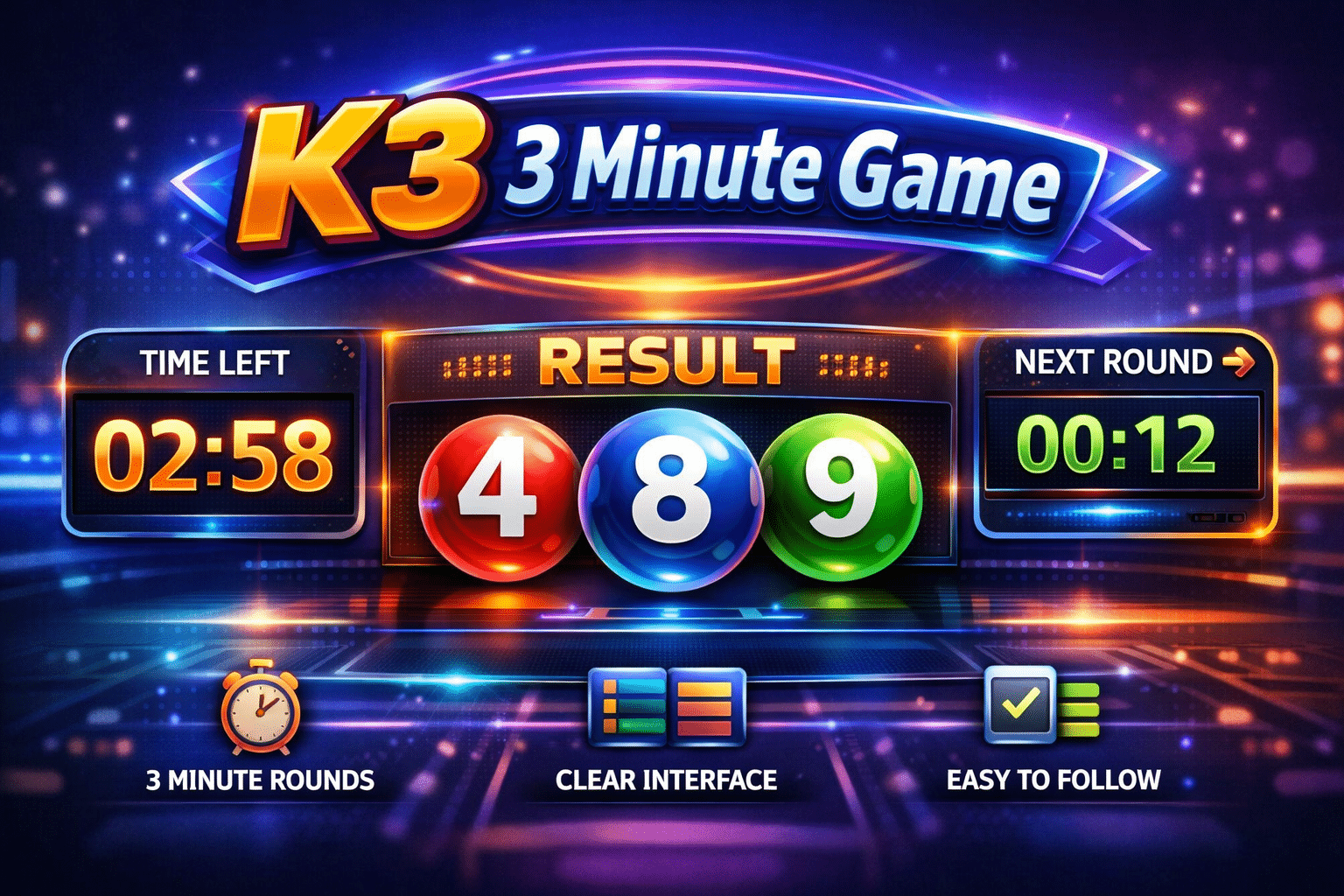
BigMumbai.Tips K3 3 Minute Game is a digital game format designed around longer interaction cycles compared to one-minute versions. Each round lasts three minutes, giving users more time to observe the interface, understand number presentation, and follow the overall game flow in a calm and controlled way.
On demo and informational platforms, the K3 3 Minute Game is commonly used to present interface structure, timing logic, and visual organization rather than real-money gameplay. This makes it a useful example for UI exploration, usability testing, and educational review of time-based game systems.
What Is the K3 3 Minute Game?
The K3-3 Minute Game is based on a simple numeric result system combined with a fixed three-minute countdown per round. Each round follows a consistent and easy-to-follow pattern:
- A visible countdown timer shows the remaining time
- Results are generated at the end of each three-minute cycle
- The interface resets smoothly for the next round
This predictable structure allows users to understand the game quickly without complex instructions. The focus remains on clarity, timing, and logical presentation.
Three-Minute Round Structure and Game Flow
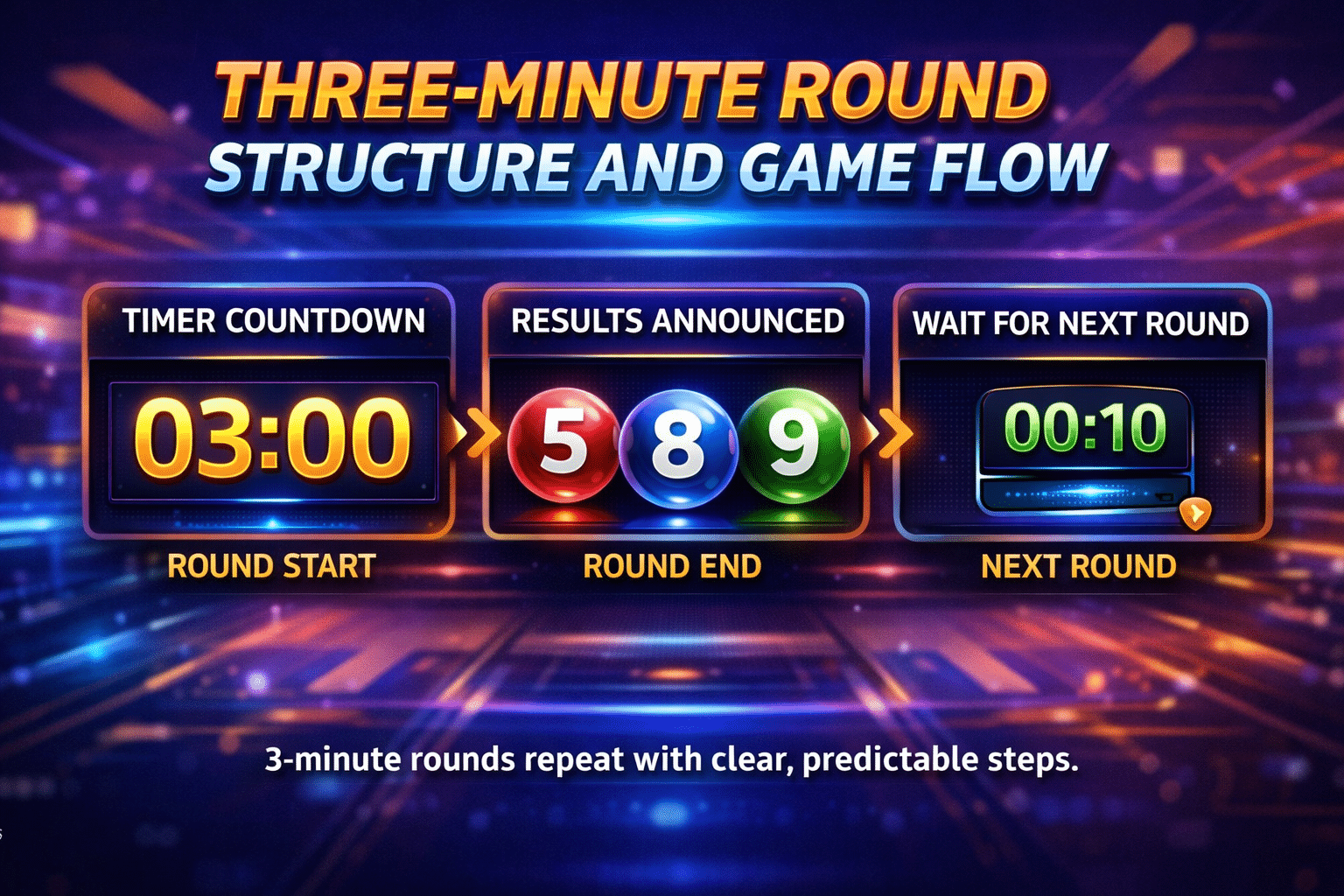
Extended Countdown Timing
The three-minute timer gives users more time to follow each round comfortably. This slower pace is suitable for users who prefer a relaxed viewing experience and want to observe interface behavior in detail.
Smooth Result Transition
When the countdown ends, results are displayed clearly and immediately. The transition between rounds is smooth, helping maintain a stable and uninterrupted visual experience.
Consistent Game Rhythm
Each round follows the same timing and layout pattern. This consistency helps users feel familiar with the interface and reduces confusion during repeated interaction cycles.
Interface Design of the K3 3 Minute Game
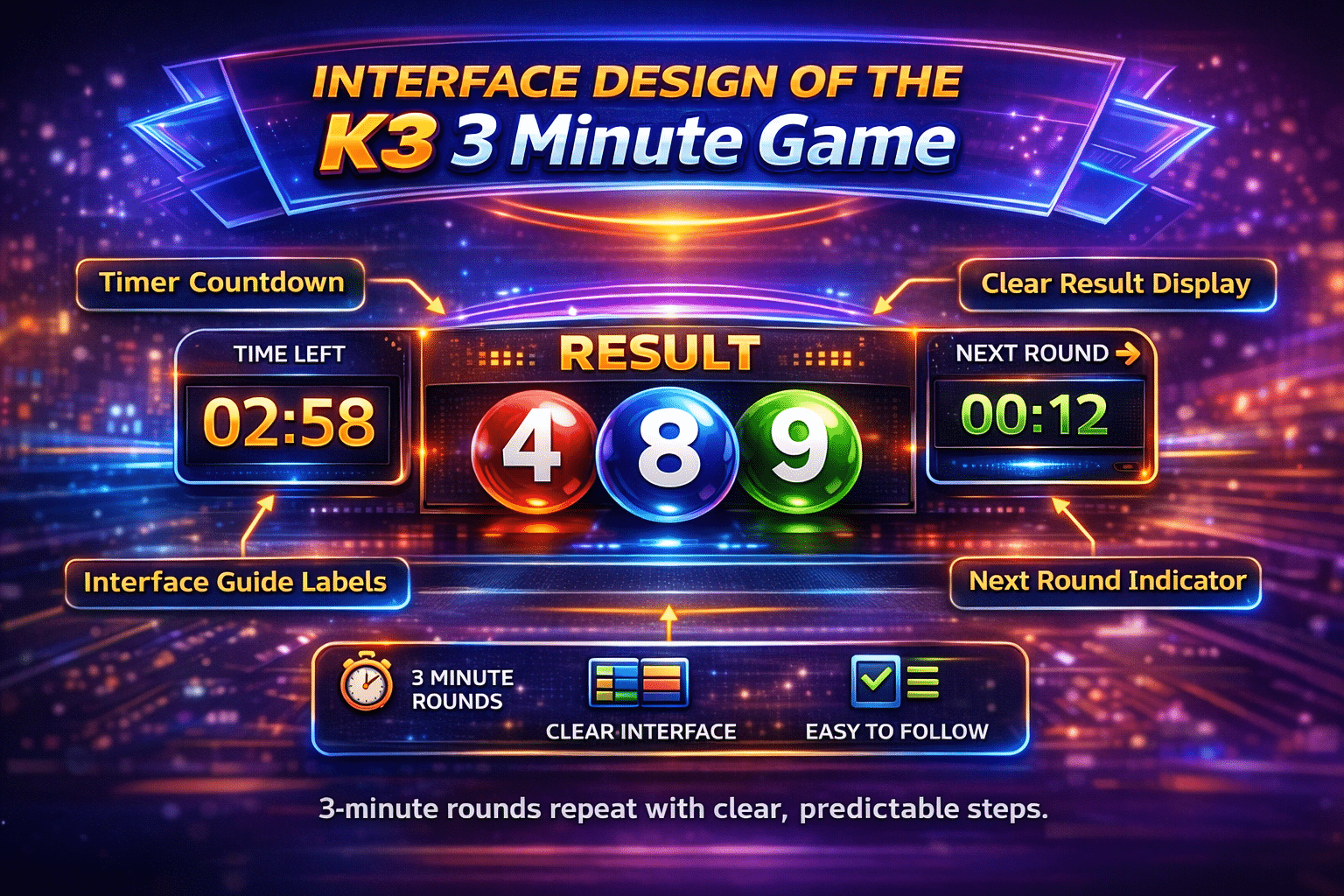
Clean and Organized Layout
The interface of the K3 3 Minute Game is designed to be clean and well-structured. Important elements such as the timer, numbers, and result areas are positioned clearly to guide user attention.
Easy-to-Read Number Display
Numbers are presented with clear fonts, proper spacing, and balanced contrast. This improves readability and makes results easy to understand at a glance.
Responsive and Device-Friendly Design
Many demo versions of the K3-3 Minute Game are optimized for both desktop and mobile devices. The layout adjusts smoothly to different screen sizes, ensuring a consistent experience across platforms.
User Experience Benefits
More Time for Observation
With a three-minute duration for each round, the game gives users more breathing room to observe how the interface works. Instead of feeling pressured by fast timing, users can take their time to notice layout details, visual transitions, and information placement. This slower pace makes the K3 3 Minute Game especially suitable for demo platforms and websites focused on learning, interface review, and user experience exploration.
Simple Learning Curve
The K3-3 Minute Game is designed with straightforward logic that is easy to grasp. Most users can understand how the game operates after watching a single round. Because there are no complicated rules or steps, the game remains accessible to a broad range of users, including those who are new to this type of digital interface.
Stable and Predictable Interaction
The K3 3 Minute Game offers a reliable interaction pattern thanks to its fixed timing and consistent round structure. Each cycle follows the same flow, which helps users feel comfortable and confident while browsing the interface. This predictable behavior allows users to focus on observing the design and layout without uncertainty about how the game will progress.
Educational and Demo Value
The K3-3 Minute Game is often used on demo platforms for purposes such as:
- Demonstrating time-based game mechanics
- Analyzing user interaction behavior
- Studying layout balance and visual flow
- Testing interface performance and responsiveness
Because there is no focus on financial outcomes, users can concentrate fully on design and usability aspects.
Visual Design and Readability
Balanced Color Scheme
The interface uses balanced colors to highlight important sections without overwhelming the user. Text and numbers remain clear and easy to read.
Simple Icons and Labels
Icons and labels are minimal and intuitive, supporting quick understanding even for first-time users.
Consistent Visual Style
The K3-3 Minute Game keeps the same visual style across all rounds.
This consistency helps users feel familiar with the interface.
As a result, repeated interaction becomes smooth and comfortable.
Performance and Stability
Smooth Interface Transitions
Animations and transitions are kept simple and smooth, preventing distraction during round changes.
Reliable Timing System
The three-minute countdown is stable and accurate, which is important for demo environments and usability testing.
Lightweight Operation
The interface is optimized to load quickly and run smoothly on most devices, including those with average performance.
Responsible and Informational Use
On informational and demo-oriented platforms, the K3 3 Minute Game is introduced as an educational example rather than a real gameplay product. It does not support real-money actions or financial processing. Instead, the content is designed to highlight interface structure, visual organization, and time-based interaction in a clear and transparent manner.
By presenting the game in this way, websites can offer a safe and responsible browsing environment while still helping users understand key principles of modern digital game design.
Why the K3 3 Minute Game Is Popular on Demo Platforms?
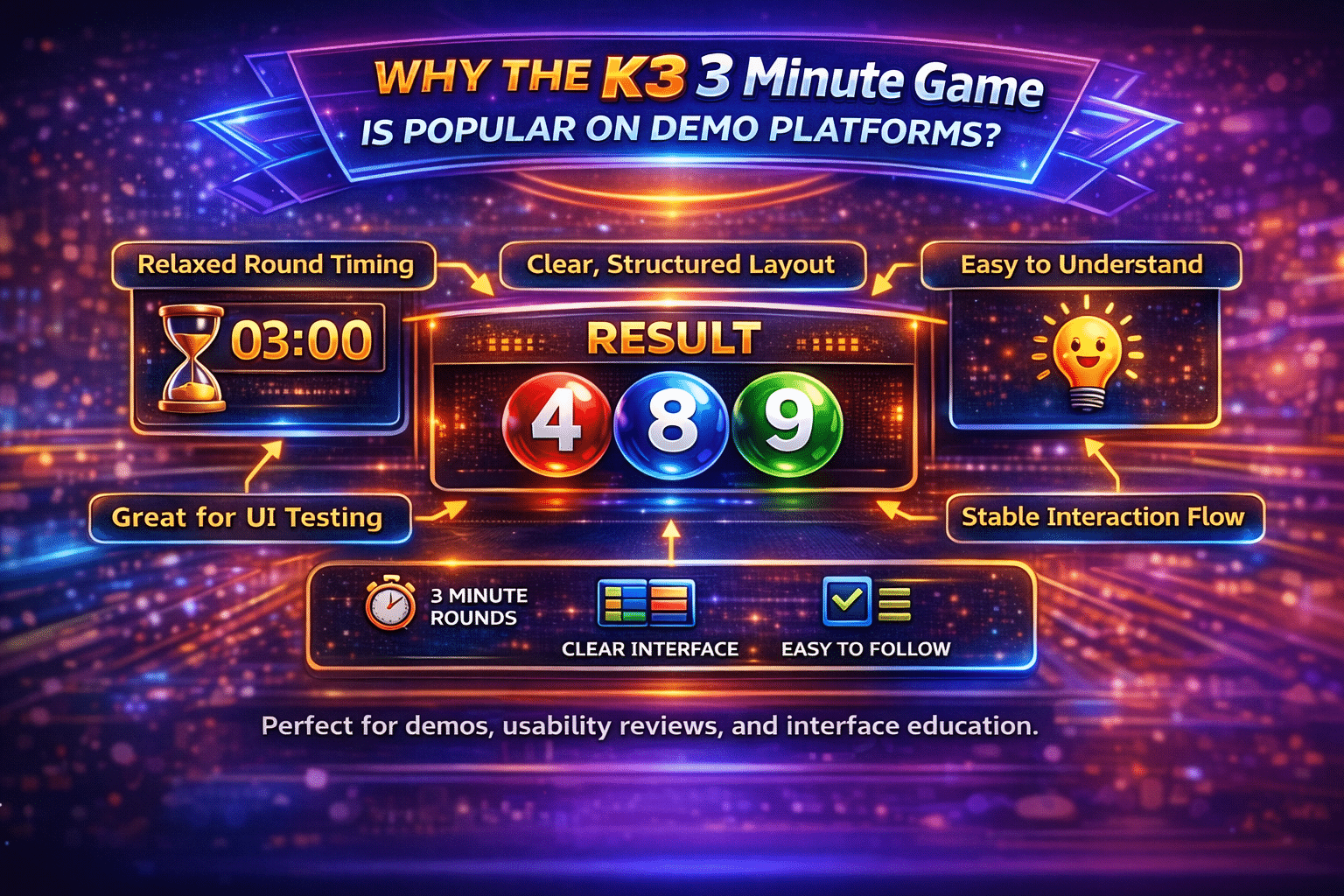
The K3-3 Minute Game is commonly featured on demo platforms because it provides a balanced and easy-to-follow experience. Its longer round duration allows users to observe interface behavior without pressure, while the clean layout makes information easy to read and understand.
The game is especially helpful for beginners, as the logic is simple and consistent across rounds. It also offers strong value for UI/UX testing thanks to its stable timing and predictable interaction flow. These advantages make the K3 3 Minute Game a suitable choice for educational content, interface demonstrations, and usability research on demo-oriented websites.
Conclusion
The K3 3 Minute Game is a well-organized digital game format that emphasizes clarity, timing, and user-friendly design. With its three-minute rounds, clean layout, and consistent structure, it provides strong value for demo platforms and informational websites.
By focusing on interface logic and visual presentation rather than outcomes, the BigMumbai K3 3 Minute Game serves as an effective example for studying time-based digital games and understanding how modern interfaces support smooth and readable interaction.
